Overview
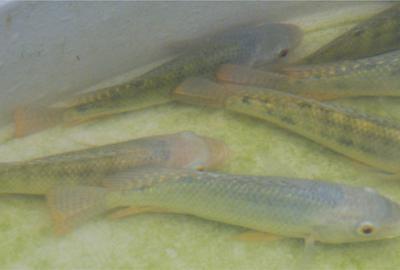
Medicine of Aquatic Life department at the Faculty of Veterinary Medicine, Suez Canal University, is geographically distinguished by its role, as it covers five governorates: Ismailia, Port Said, Suez, North Sinai, and South Sinai. It also supervises fish farms in the east of the Suez Canal, as well as private freshwater and saltwater fish farms, and shrimp farms in all the canal governorates.
The department applies preventive measures to prevent the occurrence of diseases with the use of modern diagnostic techniques for early diagnosis of fish and shrimp diseases, solving water-related problems, and treating infected fish in unconventional methods. It also follows up on problems related to the development of inland lakes.
The department is distinguished by its research role through holding workshops and seminars on the development of fisheries and participating in national research projects with STDF in addition to holding training courses and seminars on Mari-culture, its problems, and solutions. The department has an important role in spreading awareness and guidance to all groups of farmers, farm owners, and researchers through seminars, workshops, and training courses.
Mission
The department aims to provide students and postgraduate students with the knowledge and skills necessary to make them eligible for integration and competition in the local labor market, in addition to directing scientific research to serve the community and solve its problems.
Vision
The Department of Fish Diseases and Management at the Faculty of Veterinary Medicine – Suez Canal University looks forward to excellence at the local level based on its educational programs, research activities, community services related to the surrounding environment, and the dedication of its staff.
Goals
- Developing the capabilities of faculty members and assisting in the department.
- Raising the efficiency of the department’s employees.
- Commitment to implementing quality standards.
- Continuous improvement in the quality of the educational process.
- Developing graduate studies programs and courses in the department.
- Directing scientific research towards community service and solving its problems.
- Development of the department’s laboratories.
There is no better place to start your journey than here at the Department of Fish Diseases and Management. With our Bachelor of Veterinary Science, you can enjoy an education that is flexible and internationally recognized, equipping you with the necessary skills to excel in your dream career. By the end of our degree, you can expect to be provided with a comprehensive education that taps into the multifaceted discipline of Fish diseases and Management. That provides students with the knowledge and understanding of the principles and practice of fish farming and sustainable aquaculture, which enables them to apply a scientific and research-led approach at a practical level to improve performance, health, and welfare.
Faculty of Veterinary Medicine, Suez Canal University, grants the student Bachelor's degree in Veterinary Medicine.
Fish diseases and Management department Laboratory
Education system
1- Learning language along all academic years is English, but in Arabic for University requirements.
2- Bachelor degree period is 6 years.
3- Education system inside the faulty is Credit hours system. Each academic year is divided into two semesters.
4- Student per each semester takes theoretical and practical courses, mentioned in the academic plan of education program.
5- For each course, number of hours are mentioned in education plan.
6- Student is shifted from one year to next year, in case of success in all courses, failure or absence (with or without an excuse) minimum in two courses only.
7- Student who failed in more than two courses, must re-take courses failed in and undergo the exam in the next year.
8- As for senior students who failed in more than two courses, they will take the exam in the 2nd round in September. If they failed in 2nd round exam, Statement Z will be applied on them.
9- In case the student passed in re-taken course, he/she will acquire highest “accepted” grade, if the student is absent with an accepted excuse, he/she will acquire actual grade.
- Fish Diseases and Management graduate programs are delivered part-time on campus and online, within an interactive online learning environment.
- Master’s degree is an excellent option for busy working veterinarians looking to advance their knowledge and skills to achieve their career aspirations, whether they want to work within fish producing sectors, aquaculture sustainability, and fisheries or want to continue their development into further study for a PhD.
- Opportunity for those aspiring to work in the fish farming and industry, tackling a lack of appreciation of fish diseases diagnosis and fish productivity in the context of the commercial fish industry.
- A chance to enhance your knowledge and consolidate your expertise in the field.
The faculty offers its graduates different degrees to acquire:
- Diploma degree
- Master’s degree
- PhD degree
Terms of applying:
- Student applies a request to faculty’s Dean, who shifts him\her to department’s council in charge, as to state research’s topic and program, Finally all documents will be presented to faculty’s council for needed action.
- Research topic is stated before applying at least with two years. Committee is in charge to edit research’s title.
- Faculty’s council is in charge with stopping student’s registration for a period of time, in case of applying an accepted excuse, deprives him\her from education or research completion. This period will not be included with period mentioned in (16) (17) terms.
- Student’s registration is stopped in case:
Supervisor’s report about the student is unsatisfying.
Estimated period is ended and student did not apply the research yet.
If the committee refuses discussing research paper twice.
- Student applies 10 copies of research paper, after being accepted, as to be distributed among committee’s members and faculty’s library.
- The committee is in charge to exchange research paper with other universities.